

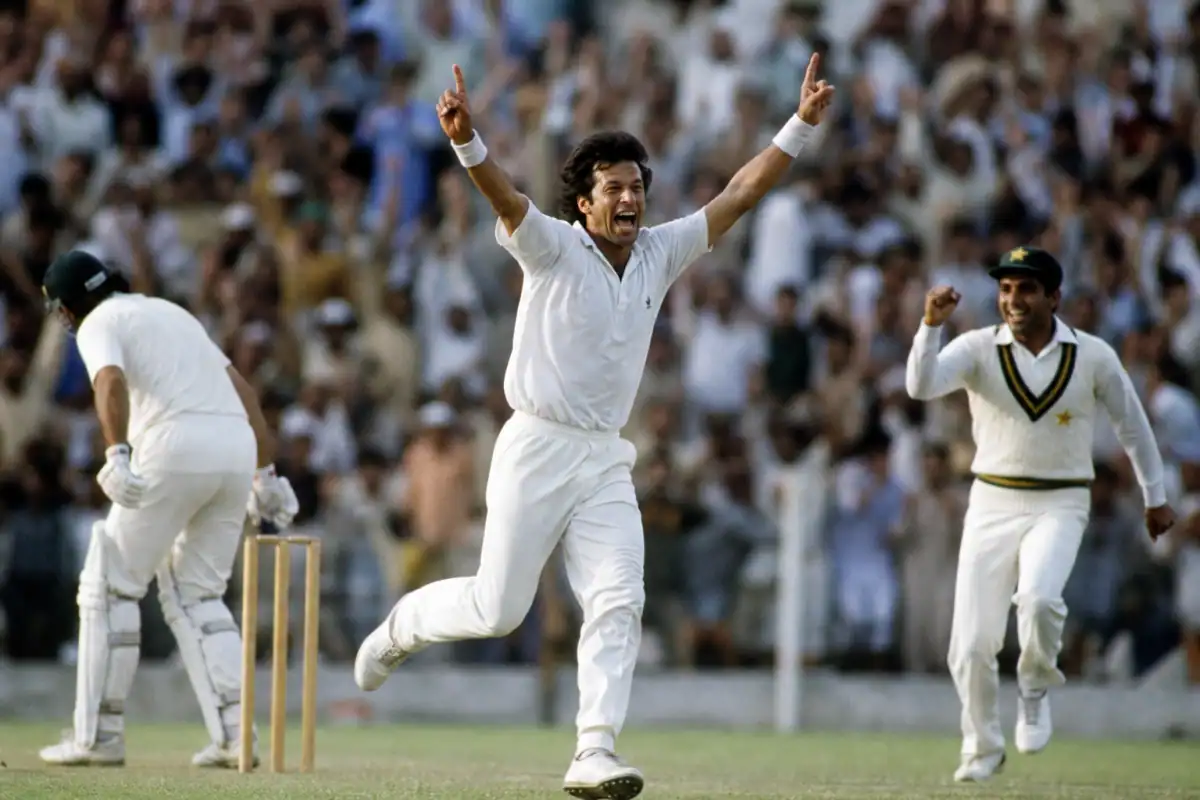
How Imran Khan’s match-turning spells reshaped contests
I have studied many bowling performances that altered the course of Tests, and few are as instructive as Imran Khan’s five-wicket hauls. From the earliest days of his international career I watched him use pace, movement and relentless intent to create decisive windows of opportunity. In this section I want to set the scene: what a five-wicket haul means in the flow of a Test match, and why Imran was particularly skilled at turning an ordinary position into a match-winning one.
Why a five-for is more than a statistic
When I talk about five-wicket hauls, I emphasize their effect, not just the number. A five-wicket return can:
- break a troublesome partnership and expose tail fragility;
- shift momentum by forcing a follow-on or creating a batting collapse;
- allow the captain to press for a result instead of settling for a draw;
- psychologically dent the opposition, especially when wickets fall in clusters.
Imran’s five-fors rarely arrived in isolation. I noted that they often came at turning points — immediately after the opposition had consolidated, or when Pakistan needed quick wickets to set up a declaration. His strikes were tactical weapons as much as expressions of individual brilliance.
Early match-turners: the rise of an aggressive leader
In the early phase of his career I observed Imran applying raw pace with evolving craft. He did not simply rely on speed; he learned to control angles, vary lengths and exploit conditions. Those early five-wicket hauls read like a manual on how to convert potential into decisive advantage. Rather than list every figure, I focus on the patterns that made those performances match-turning:
- Rapid breakthroughs: Imran frequently struck early, removing top-order batters and exposing middle-order fragility. I saw matches tilt the moment he broke the first partnership.
- Late-innings intensity: In several games his wickets came when batters were set but conditions were fraying — his ability to sustain attack at the end of a day forced collapses.
- Leadership with the ball: Even as a young bowler he set an aggressive field and backed his own plans. I noticed how this made captains and batters second-guess decisions under pressure.
Key lessons from the early five-wicket spells
From those formative match-turning hauls I drew three practical lessons that apply to understanding any great strike bowler: timing matters as much as skill, tactical intent magnifies impact, and psychological pressure compounds physical advantage. Those lessons explain why Imran’s early five-fors did more than pad statistics — they changed how the opposition approached the rest of the contest.
Having established the strategic and technical backdrop of Imran’s early match-turning performances, I will next examine specific matches and moments where his five-wicket hauls decisively swung Test results, starting with the most influential of those early spells.
The defining early spell that set the template
One performance from Imran’s early years stayed with me because it encapsulated everything I’d already described in the abstract: raw pace tempered by tactical intelligence. In that Test he arrived as the answer to a stubborn first-innings partnership that had absorbed time and threatened to blunt Pakistan’s control. Rather than merely attacking with speed, he changed rhythm — a probing length ball to draw the front foot, followed by a sharper, shorter delivery angled into the pads, then a full, swinging delivery to tempt an edge. The breakthrough came not as an accident but as the culmination of pattern-setting.
What made that five-wicket haul decisive was the sequence. Each wicket altered the line of play: a set batter removed, a new partnership forced into scramble, a lower-order batter exposed to sustained hostility. The captain moved fielders to squeeze the batsmen into errors; Imran kept the pressure valve on, refusing to allow the opposition to regroup. By the time the fifth wicket fell the balance had shifted so dramatically that what had looked like a drawn contest now had a resultable trajectory. That match remains, for me, the archetype of how an early-five can do more than add a column to the scorebook — it rewrites the match script.
Late-innings intensity: finishing what momentum began
Not all of Imran’s most influential five-fors arrived at the start of an innings. Some came at the end of long batting days when the pitch had tired and batters had become complacent. There is a special art to sustaining venom over multiple spells and sessions, and Imran perfected it. He would bowl long, measured spells to set up the scenario — force a false stroke early in one spell, then return after a short break with an intensified plan exploiting that earlier edge.
In several Tests I watched this pattern produce near-automatic collapses. He would strike once or twice to loosen the defence, then accelerate: shorter lengths, more aggressive field placements, and bowlers behind him kept the heat on. The opposition’s set batters, already nursing weariness or frustration, began to miscalculate. These late-innings five-wicket hauls turned matches because they removed the opposition’s last bastions of resistance, enabling declarations, setting chaseable targets or simply erasing a first-innings advantage.
Bowling as captaincy: tactical synergy that magnified impact
One recurring thread in these match-turning hauls was Imran’s seamless fusion of bowling and captaincy. Even before the formal armband was his, he orchestrated fields and rotations as if the match map were visible only to him. He anticipated batsmen’s adjustments and countered them by altering angle, length and attack pace. When a batter looked to play off the back foot, Imran honed in on fuller lines; when they became tentative against the short ball, he peppered the corridor and ears.
This tactical interplay did more than unsettle opponents physically — it amplified psychological stress. Captains facing Imran had to choose between defensive measures that conceded runs and aggressive responses that increased wicket risk. That tension compounded the effect of every wicket he took: the field moved not simply to support the bowler but to execute a larger plan. Watching those moments, I came to see Imran’s five-wicket hauls as collaborative triumphs — victories won by bowler and captain thinking as one, and by a team willing to press home brief windows of advantage.
Closing reflections on Imran’s match-turning craft
Legacy for future generations
Imran Khan’s five-wicket hauls left a template: an athlete who fused physical skill with strategic thought and used both to force decisive moments. That blend — leadership through bowling as much as through words — is why his spells continue to be studied by students of the game. For a factual record of his career and the matches that produced those moments, consult his detailed profile: Imran Khan player profile.
Practical lessons for bowlers today
- Prioritise timing and pressure: the right wicket at the right moment multiplies its effect.
- Think like a captain: field placements and spell sequencing extend a bowler’s influence.
- Vary rhythm and length deliberately to unsettle set batters rather than relying on pace alone.
- Maintain intensity across sessions — late-innings aggression can convert small edges into match-defining collapses.
These reflections are not a summary but an invitation: to watch those spells again, to study their subtle patterning, and to appreciate how a great bowler can do more than take wickets — he can change the match’s very possibilities.