

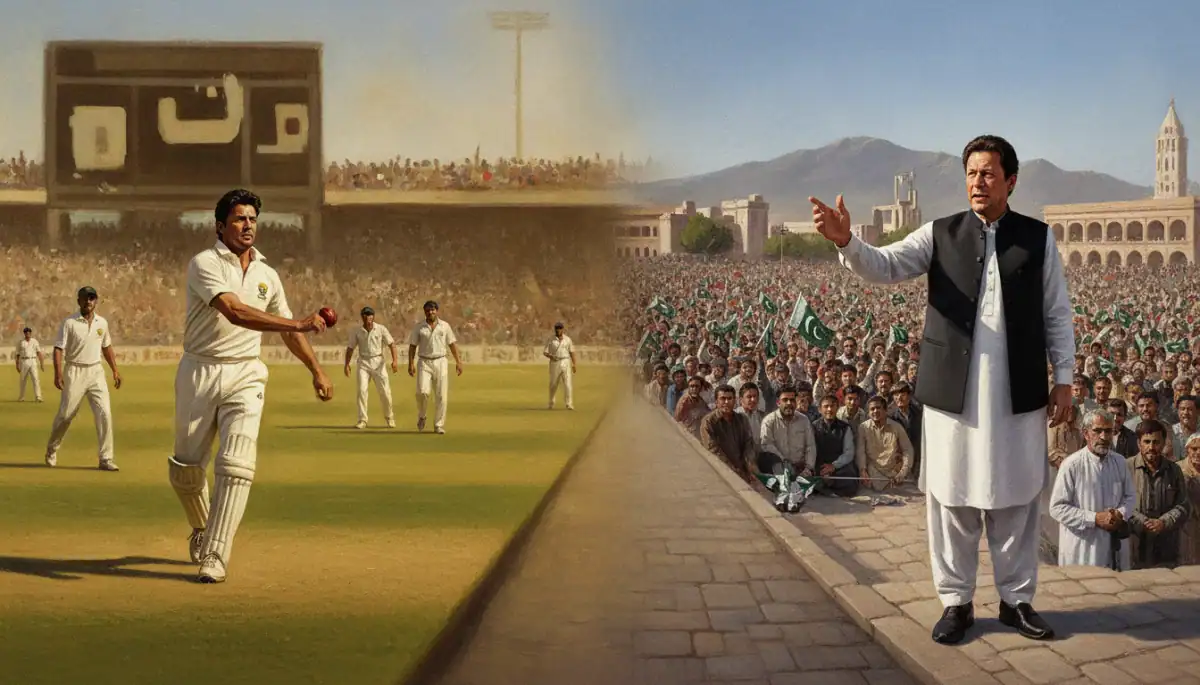
From Lahore school fields to a destiny on the pitch
I began this account wanting to understand how a young boy from Lahore transformed into one of cricket’s most compelling figures. Imran Khan’s early years set the tone: born into a prominent family in 1952, he was exposed to privilege and expectation, yet it was the cricket ground that called to him most insistently. I find that his trajectory combines natural athletic ability, disciplined study, and a willingness to adapt—traits that would shape both his sporting and public life.
In Lahore, Imran’s first encounters with the game were not merely recreational. They were formative. The rhythms of practice, the local coaching culture, and the competitive spirit among schoolmates pushed him toward the seam of fast bowling and the technique needed for effective strokeplay. I observed three early characteristics that marked him as different:
- Physical presence and athleticism: even as a teenager he had the build and fitness to bowl long spells and handle the rigours of international travel.
- Competitive temperament: a clear desire to win and to shoulder responsibility, visible in school and club matches.
- An appetite for learning: he combined formal education with cricketing study, absorbing technical and tactical lessons from coaches and senior players.
Oxford, the university cricketing stage, and the leap to Tests
Choosing to study at Oxford was a pivotal decision I see as both academic and cricketing. At Oxford University, Imran sharpened his skillset against strong opposition and gained exposure to British conditions—swing-friendly pitches and a culture of first-class cricket that tested a bowler’s craft. Playing for the university side and earning a Blue offered structured coaching, consistent match practice, and the pressure of performing in high-profile fixtures like the Varsity matches.
From university honours to the international arena
Imran’s performances at university level did not go unnoticed. Selectors were watching for a fast bowler who could also contribute with the bat; the term “all-rounder” began to stick because he offered balance to any side. I note that his jump to international cricket was rapid by contemporary standards: he entered the Test arena as a young, promising performer still refining his repertoire.
Early international appearances revealed traits I had already observed at the domestic and university levels—pace that unsettled batsmen, a knack for breakthroughs, and the confidence to occupy the crease when needed. Those years were a laboratory for his evolving bowling tactics: learning to vary pace, exploit seam and swing, and set fields that reflected a growing cricketing intelligence.
As I trace these formative chapters, it becomes clear how education, early mentorship, and the crucible of university and early Test cricket combined to transform a talented youngster into a cricketer with the temperament to lead. In the next part I will examine how Imran’s on-field achievements matured into captaincy, the development of his unique leadership style, and the building blocks of his later status as a national icon.
Crafting a captaincy: tactics, temperament, and team culture
When I examine Imran Khan’s transition from senior all‑rounder to captain, what strikes me is how deliberately he shaped the role. Captaincy was not an accident of selection but a stage on which he could impose the standards he believed would win matches and, crucially, earn respect. From tactical innovations to the harder-to-measure elements of temperament, Imran’s leadership matured into a distinct operating system for the Pakistan side.
Technically, he exploited his own strengths—fast bowling, intelligent use of the new ball, and an understanding of when to attack or consolidate—and expected others to fit around those priorities. He experimented with bowling rotations to keep pressure constant, set fields that invited batsmen to make mistakes, and backed bowlers through spells when momentum felt fragile. Yet tactics alone do not make captains. The more revealing measures were his man‑management and psychological interventions.
I observed a captain who demanded fitness and mental toughness, who would publicly shield young players while privately setting high standards. He had a knack for identifying temperament as much as raw talent, bringing through teammates who responded to responsibility rather than coddling. That approach created a culture in which individuals were expected to rise to the occasion—sometimes brutally, sometimes brilliantly—but almost always accountable. It turned a collection of gifted players into a coherent unit capable of strategic thinking under pressure.
From triumph to trust: philanthropy, public presence, and the making of an icon
Sporting success laid the groundwork, but becoming a national icon required a translation of on‑field authority into public meaning. Imran’s captaincy wins, culminating in that unforgettable 1992 campaign, gave Pakistanis a narrative of resilience and national pride. I find it important to distinguish between fame and trust: fame can be transitory; trust is built when public figures invest personal capital in causes larger than themselves.
Imran did this in two visible ways. The first was through tangible projects—most notably his hospital initiative, established in the aftermath of his cricketing peak and born from personal loss. By channeling the symbolic victory of sport into concrete social investment, he linked his public persona to compassion and national service. The second was his cultivated public image: a global celebrity who remained rooted in Pakistani sensibilities. He mastered media attention without allowing it to eclipse a narrative of duty.
These building blocks—tactical and cultural leadership on the field, combined with philanthropic and public commitments off it—help explain why Imran’s transition from celebrated cricketer to national symbol felt natural rather than manufactured. The elements were in place: sporting credibility, an ethos of responsibility, and projects that converted admiration into trust. In the next part I will follow how those foundations were tested and expanded as he moved into the public and political arenas, and how the mythology around his persona continued to evolve.
The political turn and a contested public life
After channeling sporting triumph into philanthropic work, Imran Khan’s decision to enter formal politics altered both his reach and the way his past was read. Politics amplified the traits that made him an effective captain—charisma, resolve, and a willingness to challenge entrenched systems—but it also exposed him to the polarizing dynamics of public power. His years in office and the campaigns that preceded them invited scrutiny, debate, and reassessment, making his legacy a subject of ongoing national conversation rather than settled admiration.
Legacy beyond the boundary
Imran Khan’s life resists tidy categories. He remains, simultaneously, a cricketing pioneer whose tactical instincts and leadership redefined an era, a philanthropist who turned personal prominence into public projects, and a political actor whose ambitions and controversies have reshaped Pakistan’s civic discourse. What endures is less a single narrative than a set of tensions worth attending to: the interplay of talent and discipline, the responsibilities of celebrity, and the ways sporting authority can translate into wider social influence.
Whether one approaches his story as a sports fan, a student of leadership, or a citizen observing the public sphere, Imran’s journey offers lessons about the reach of individual agency and the moral complexity of public life. For those who want to dive deeper into his cricketing record and match-by-match achievements, a comprehensive resource is the Imran Khan profile at ESPNcricinfo, which complements the human story with detailed statistical context.