

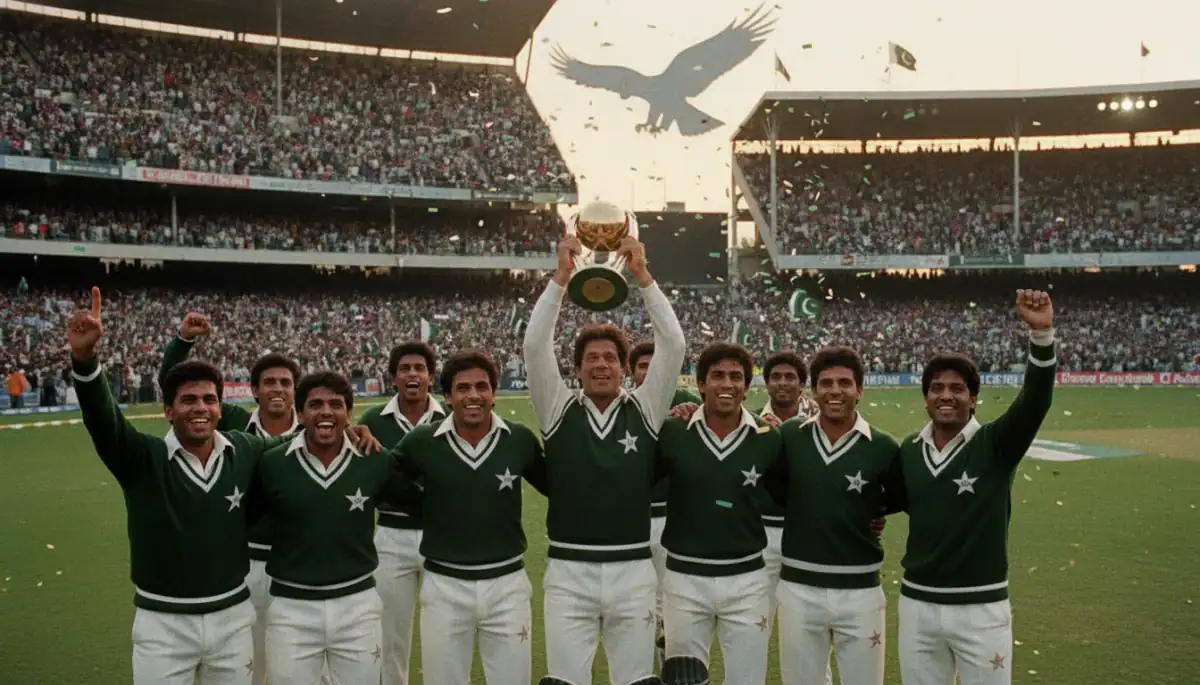
Imran Khan’s Journey from All‑Rounder to Inspirational Captain
I have long regarded Imran Khan as one of cricket’s most compelling figures because his captaincy combined elite skill with a distinct leadership philosophy. Before 1982, when he first captained Pakistan, I see a player defined by raw talent: a fast bowler with late swing, a hard‑hitting batsman capable of rescuing innings, and an athletic presence in the field. Yet it was his evolution into a captain that transformed both his career and Pakistan cricket.
When I look back at his early tenure as skipper, several patterns stand out. He emphasized fitness and discipline at a time when such standards were not universally enforced in Pakistan cricket. He demanded accountability from senior players and created opportunities for young talent. I observed how he managed personalities—sometimes brash and proud—by blending firmness with personal example. Those qualities didn’t emerge overnight; they were honed through a string of series, tours, wins, and setbacks that taught him when to push, when to placate, and when to lead from the front.
Strategic Foundations: Team Building and Tactical Shifts Before 1992
To understand the 1992 triumph, I study the strategic choices Imran made through the 1980s. He shifted Pakistan away from relying solely on individual brilliance and toward a more collective approach. I note three interlinked areas where his influence was decisive:
- Bowling depth: I saw Imran invest in pace and variation, nurturing bowlers who could exploit both pace-friendly and low‑bounce conditions. He encouraged reverse swing mastery, which later proved decisive in world conditions.
- Batting resilience: I observed a deliberate effort to create a middle order that could rebuild or accelerate as needed. Imran’s mentorship helped several players develop temperament for pressure situations.
- Mental toughness: I recognized his insistence on psychological preparation—instilling belief that Pakistan could win away from home and in adverse situations.
Personnel decisions reflected these priorities. He backed match‑winners but also persisted with role players who fitted tactical plans—fielders who saved runs, seamers who could bowl disciplined spells, and all‑rounders who balanced the lineup. I also note how he adapted field placements and bowling changes to match conditions rather than conventional expectations, a flexible approach that gave Pakistan an edge in close contests.
Perhaps most importantly, I found that Imran’s captaincy style relied on leading by example. His personal performances in crunch moments signaled to teammates that responsibility was shared and that no task was beyond the skipper. This culture of shared accountability and adaptability was the foundation upon which the World Cup campaign would later be built.
Having outlined these formative strategies and the team dynamics Imran cultivated, I will next examine how these elements coalesced during the 1992 World Cup campaign and how individual matches reflected his leadership decisions.
The 1992 Campaign: From Early Stumbles to a Renewed Collective Belief
When I revisit the 1992 tournament, the thing that strikes me most is the psychological arc more than the scoreboard. Pakistan did not arrive as an overwhelming favourite; they stumbled badly in the early rounds and at one point looked on the verge of an ignominious exit. What transformed that precarious position into a championship drive, in my view, was Imran’s refusal to accept panic as an option. Rather than reshuffle the team frantically, he returned to the strategic foundations he had spent the previous decade building: trust in roles, clarity of purpose and a steady emphasis on process over panic.
Imran’s management of morale was as tactical as his use of bowlers. He kept the dressing room focused on one match at a time, removed media noise where possible, and used personal example to reset standards—training harder, fielding sharper, and thinking in terms of match situations rather than tournament anxiety. That steadiness allowed young players, previously tentative on the world stage, to relax into defined roles. Pakistan’s revival in the middle of the tournament was not simply a string of form reversals; it was the visible payoff of a culture Imran had been engineering for years—collective responsibility, discipline under pressure, and an emphasis on adaptability.
I also think the tournament underscored an important lesson about leadership: momentum is manufactured through small, repeatable choices. Imran’s insistence on fitness, for example, showed up when Pakistan executed in the field and did not capitulate in tight run chases. His surgical use of personnel—backing certain bowlers for particular overs, encouraging part‑time bowling when it choked scoring, and balancing aggression with containment—turned a fragile campaign into a relentless one. The result felt less like a single great wave of form and more like the steady accrual of tiny, correct decisions that together changed the tide.
Decisive Matches and Tactical Masterstrokes: How Captaincy Won the Cup
Looking match by match, I find Imran’s tactical fingerprints everywhere. He was not a captain who relied on one trick; he had a repertoire and switched between them as conditions and opposition demanded. In matches where Pakistan needed wicket‑taking aggression, he trusted his strike bowlers to reverse swing the ball and attack in tandem rather than protect the game. In others he was willing to weather early blows, reshuffle the batting order for stability, and then accelerate—an approach that required both personal courage and clear communication.
The final is, of course, the clearest testament to this blend of strategy and example. Faced with early setbacks in the innings, Pakistan needed composure and a plan — the kind Imran had drilled into the team. His measured batting under pressure, his judicious use of bowlers, and his calm on the field unified a side that had seen far worse and yet believed more for it. Beyond any single decision, what I remember is the atmosphere he created: a team that trusted each other and their captain’s read of the match, even when the situation looked bleak.
Tactically, Imran’s regular recourse to flexible field settings, rotation of seam and swing specialists, and the willingness to give emerging players pivotal overs in crunch moments turned would‑be vulnerabilities into strengths. Those choices allowed Pakistan to win not just through individual brilliance but through orchestrated performances—bowlers making breakthroughs at the right time, batsmen pacing chases intelligently, and fielders converting half‑chances that swing narrow contests. In the end, the World Cup was won as much by a captain’s temperament and method as by the runs and wickets recorded in the scorebook.
Legacy and Leadership Lessons
Imran Khan’s captaincy is less a closed chapter and more an ongoing conversation about what leadership in sport — and beyond it — can mean. His methods and temperament created a template that still prompts debate: the value of leading by example, the importance of role clarity, and the discipline to make hard selections even when they are unpopular. Those ideas resonate with coaches, captains and managers across disciplines because they speak to the human side of team performance as much as to technique.
Beyond tactics and trophies, Imran’s tenure highlighted the ripple effects a single leader can have on culture — raising standards of fitness and professionalism, demanding accountability, and investing in younger players so structures outlast any single season. That legacy complicates easy judgments: greatness came with controversy, and influence carries responsibilities that persist after the applause fades. Appreciating his captaincy therefore involves both admiration for its accomplishments and acknowledgement of its complexities.
Lessons for Future Leaders
- Lead visibly: actions often persuade more than words—consistent standards set by a leader shape behavior across a team.
- Prioritize roles and clarity: well‑defined responsibilities reduce panic and enable players to perform under pressure.
- Balance patience with decisiveness: backing players builds confidence, but timely changes preserve a team’s competitive edge.
- Culture outlives tactics: invest in systems and attitudes that sustain performance beyond any single campaign.
For a comprehensive record of Imran Khan’s matches, statistics and wider career context, see his Imran Khan profile on ESPNcricinfo.